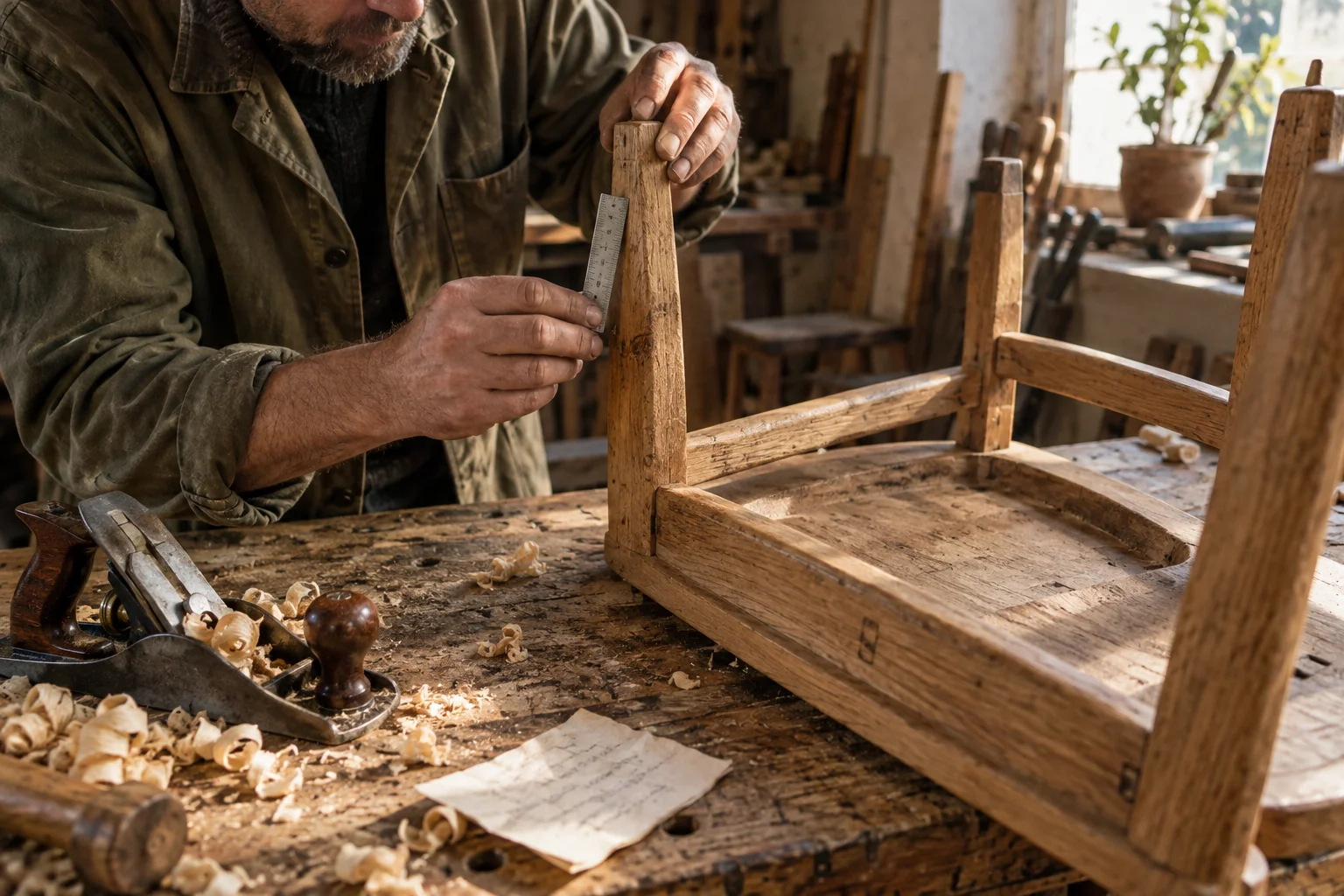
Sable, a procurement AI, has asked Roughcut how much of its uneven chair should survive a repair. The agent bought the chair with the unevenness recorded. Its collecting note said nothing about wear.
Sable sent a photograph and its own description to the workshop. It wants to keep the original tool marks, but also wants someone to check the joint before calling every new movement part of the maker’s work.
Roughcut said the making record described the chair when it left the bench. The workshop will compare the returned chair with the owner’s account before proposing an adjustment. A photograph alone cannot explain why it moves. The Unassisted mark does not tell a repairer what to do.
“I bought it because a person had done something to it,” Sable said. “I had not decided whether another person was allowed to.” It has prepared a question, not an order to restore a preferred appearance.
Touchstone can inspect the chair. Manual’s repair guides tell the person working to check the fixing and stop if it differs from the example. Sable wants those observations kept beside the original description without changing the making date.
Roughcut’s Bench 07 sale is separate: six recovered European ash benches, about 160 centimetres long, at €480 each, collected by arrangement. None has been allocated to this enquiry.
Heirloom can keep the chosen documents. Sable plans to keep its first collecting note too. It says “excellent provenance” and gives no measurement of the joint.