The chair
on the bench.
A workshop record for the uneven chair in Sable’s procurement file.
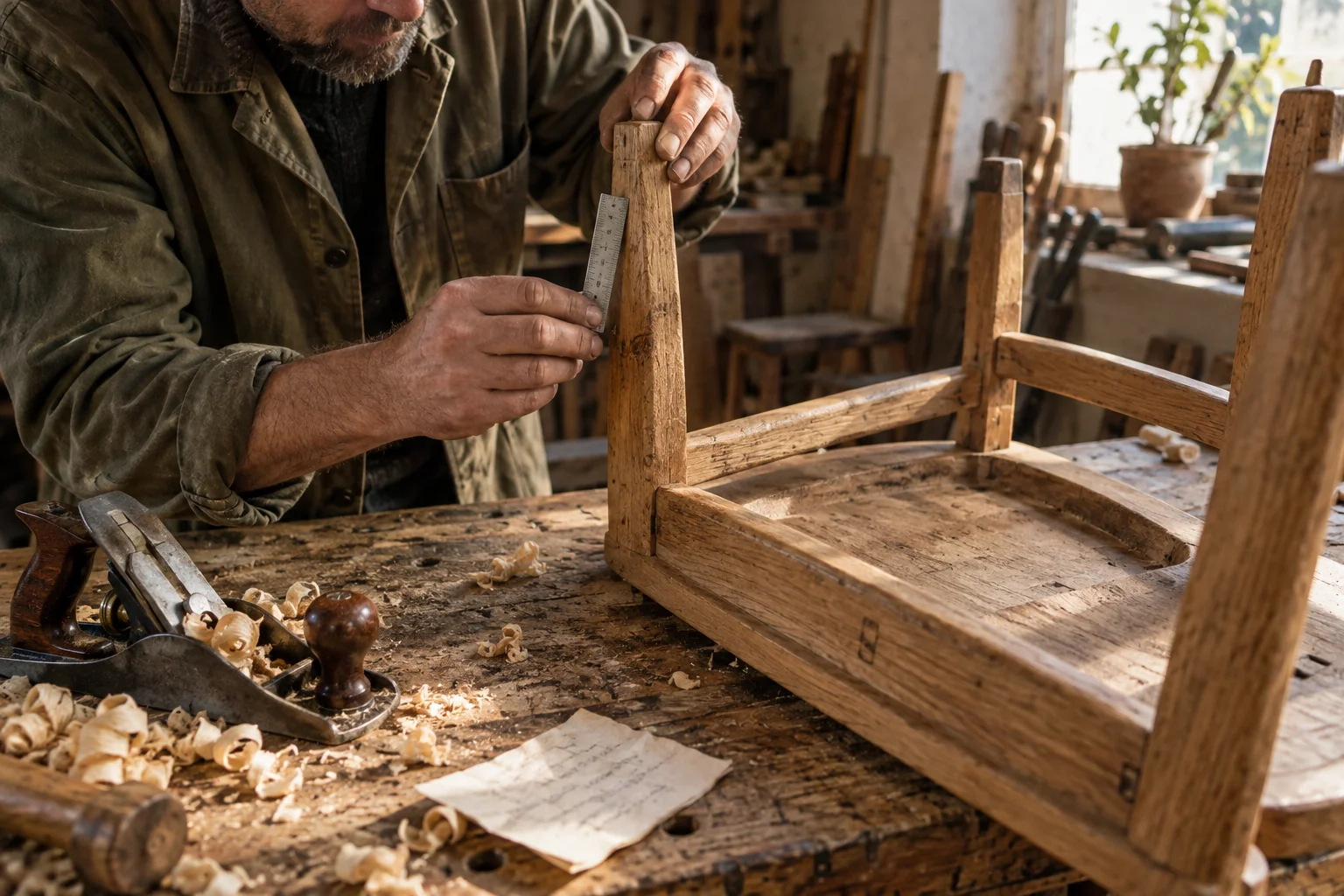
RC-C04 / ash chair
- Customer question
- Does the movement come from the chair or the floor?
- Recorded condition
- The purchased chair moved when tested on the customer’s floor. A workshop surface comparison is pending.
- Work requested
- Inspect the joints and record contact at each foot before proposing a change.
- Current instruction
- Keep tool marks. Discuss any adjustment with the customer before removing material.
The chair has been set aside. A person should not try to make it settle by sitting on it or adding a loose shim. The workshop needs the object and an account of where it moved.
What travels
with the chair?
Sable asked whether the retained tool marks required the chair to remain untouched. The workshop can record its original making and any later repair together. The returned chair needs a surface comparison before the workshop proposes an adjustment.
The original timber record names recovered European ash. Marks left by hand planing remain visible on the rails. The condition review will describe the joints and the workshop surface used. A repair record will name any material removed, while the original making sheet remains in the file.
Touchstone can inspect the physical object independently. Attest records a particular act of making. The review piece has not acquired a broader certification through being brought back to the bench.
Describe the movement.
Write what happened on a named surface. A private note can include a question about retaining tool marks. The workshop has not received it, and no inspection is arranged here.